
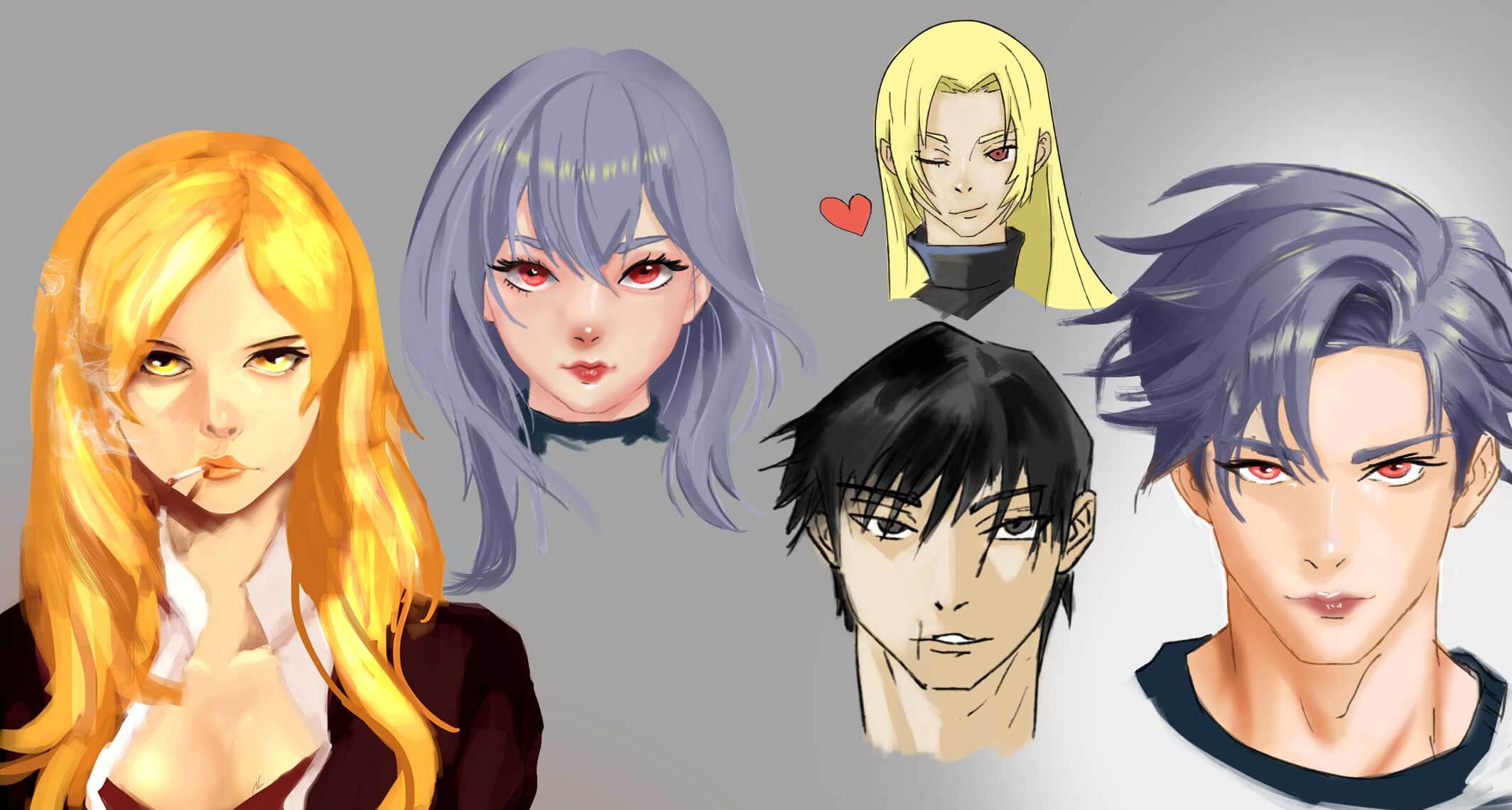
Every artist dreams of finding their own unique art style — that visual fingerprint that makes your work instantly recognizable.
But most artists wait for it to just… happen. And waiting can take years.
The good news? You can actually develop your art style intentionally. It doesn’t require some magical breakthrough moment or a decade of aimless experimentation. It requires a process — one that starts with looking outward before turning inward.
This guide breaks down a practical, three-step process to help you discover, refine, and build your own distinct look faster, through curiosity, observation, and structured practice.
Let’s get into it.
First: What Even Is an Art Style?
Before jumping into the steps, it’s worth being clear about what “art style” actually means — because a lot of beginners have a vague or slightly wrong idea of it.
Your art style is the sum of all the choices you make consistently across your work.
It includes:
- The way you handle linework (thick? scratchy? clean? absent?)
- Your color palette tendencies (warm and saturated? desaturated and moody? high contrast?)
- How you simplify or exaggerate anatomy and form
- The level of detail you default to
- Your compositional instincts
- The mood or atmosphere your work tends to carry
None of these choices happen in isolation. They layer on top of each other over hundreds of pieces until, without you fully noticing, a consistent visual voice emerges.
That voice — the thing that makes someone scroll past a hundred posts and stop at yours specifically — is your art style.
And here’s the thing most people get wrong: you don’t invent your style. You discover it.
You discover it by studying what you love, understanding why you love it, and then doing a lot of work until your own version of it surfaces.
That process looks like this:
Step 1: Collect the Art That Inspires You
Start by gathering artworks you genuinely love.
Don’t overthink it. Don’t curate it based on what seems impressive or prestigious. Just go with pieces that make you stop and stare — work that gives you that feeling of I wish I made this.
Aim for around 30–40 images from different artists and styles. These could be:
- Digital illustrations
- Animation frames and concept art
- Traditional paintings
- Character designs
- Environment work
- Even small specific details you love — the way someone renders hair, stylizes hands, or uses rim lighting
Save your collection somewhere visual. Pinterest works well. A desktop folder with everything in one window works too. Some people collage their favorites into a single image file and pin it above their workspace. Whatever gets you looking at all of them together.
What matters most: these images should reflect your actual taste, not what you think you should like.
This is harder than it sounds. A lot of artists — especially early on — collect work they think is “good” rather than work that genuinely excites them. That distinction matters a lot. You’re not building a museum of technically impressive art. You’re building a map of your own aesthetic instincts.
My Own Inspiration List
For context: the artists that genuinely stop me mid-scroll and make me think I wish I painted that are people like Guweiz, Marc Brunet, Yuumie, Maciej Kuciara, and WLOP.
What do they share that draws me to them? Each one handles lighting in a way that feels cinematic and deliberate. There’s a real sense of mood in their work, often melancholy or epic, rarely neutral. Their color use is purposeful rather than decorative. And they all have incredibly strong control over where detail lives and where it doesn’t.
I didn’t consciously decide I liked those things. I noticed it after looking at my inspiration folder and asking myself why all these pieces felt connected.
That’s exactly what the next step is for.
Tip: Include both digital and traditional art. The wider your mix, the more clearly patterns in your taste reveal themselves. If everything in your folder is the same genre, you might be collecting based on familiarity rather than genuine preference.
Step 2: Analyze and Filter What You Love
Now that you have a collection, it’s time to actually understand it.
Go through each piece and ask yourself one question: What specifically do I love about this?
Not “this is good art.” Specific. Is it:
- The soft, diffused lighting with no harsh shadows?
- The exaggerated jaw and simplified eyes in the character design?
- The way the background is almost abstract while the subject stays detailed?
- The limited color palette — maybe only four or five distinct hues?
- The loose, expressive brushwork that still reads as a face?
Write your answers down. Make yourself be specific. Vague answers like “the vibe” or “it just looks cool” don’t tell you anything useful. The moody, desaturated color palette with a single warm accent light — now that’s something you can actually work with.
Admiration vs. Envy — The Most Important Filter
Once you’ve analyzed each piece, apply this filter: do you admire it, or do you envy it?
This distinction is more useful than it sounds.
Admiration means you appreciate the work. You recognize the skill. You enjoy looking at it. But deep down, you don’t feel the pull to make work that looks like this. It’s impressive, not inspiring.
Envy means something different. It’s that specific, almost uncomfortable feeling of I want to be able to do that. Not just appreciate it — do it. Your gut is telling you this is something that resonates with your creative instincts.
Remove everything you only admire. Keep everything that makes you envious.
What you’re left with is what I call a Skill Envy List — a clear, honest map of the visual traits you actually want in your own work.
This filter alone will cut your inspiration folder in half, maybe more. And what remains will be significantly more useful.
What Patterns Emerge?
Once you’ve filtered, look at what’s left and ask:
- Do these pieces share a color temperature? (warm, cool, neutral)
- Do they tend toward high detail or deliberate simplification?
- Is the lighting dramatic or soft?
- Are the subjects idealized or stylized in a specific direction?
- Do they carry a particular emotional tone?
These patterns are the beginnings of your style. They tell you what your eye is drawn to before your hand has figured out how to get there.
Step 3: Build Your Style Through Deliberate Practice
Knowing what you want is half the work. The other half is actually building the skills to execute it.
Go through your Skill Envy List and sort each trait by difficulty:
- Easy — you already have most of the technical foundation; it’s mostly about practice and repetition
- Medium — you understand the concept but need more focused study and consistent application
- Hard — you’d need to build a fundamental skill (anatomy, perspective, color theory, lighting) before this trait becomes accessible
For each item on the hard list, ask yourself: what underlying skill does this actually require?
For example:
- Want to paint skin that looks luminous and soft? → You need to study color temperature and subsurface scattering, which means studying color theory first.
- Want dynamic, flowing character poses? → You need to study gesture and figure drawing — specifically rhythm and line of action.
- Want to paint backgrounds that feel deep and atmospheric? → You need to understand aerial perspective and value relationships.
Great art styles aren’t just aesthetic choices. They’re built on top of deeply understood fundamentals. Every stylistic decision — exaggerated proportions, a bold flat color palette, painterly loose rendering — is a conscious or unconscious modification of reality. And you can’t modify something you don’t understand yet.
Start With What’s Reachable
Begin with the easy and medium traits from your list. Practice them deliberately — not just in finished pieces, but in focused studies.
Want softer, more diffused lighting? Do ten studies of objects lit from a single soft source. Vary the surface, not the light.
Want cleaner, more expressive linework? Set a timer and do twenty-minute line exercises. Draw the same hand ten times, each time with fewer strokes.
Want to simplify faces while keeping them expressive? Study how your favorite artists reduce a face to its essential forms. Then try to do the same with reference photos — simplify, don’t trace.
Small, specific practice sessions compound much faster than general “just draw more” time.
Combining Influences Into Something New
Here’s a secret that takes most artists years to internalize: no style is original. Every artist you admire is themselves a combination of artists they admired.
Guweiz studied anime and cinematic photography. Marc Brunet comes from a games industry background and his fundamentals are rooted in classical training. WLOP blends concept art aesthetics with a painterly, almost romantic quality borrowed from classical painting.
None of them invented their style from scratch. They curated their influences intentionally — and then put in enough work that the combination became distinctly theirs.
Your job is the same. Take traits from multiple artists on your Skill Envy List, layer them with your own sensibilities, and practice until the seams disappear.
The result — eventually — is something no one else has. Not because you invented new techniques, but because the combination of everything you absorbed and chose is uniquely yours.
What “Finding Your Style” Actually Feels Like
A lot of artists imagine finding their style as a sudden moment of clarity — like one day you sit down, paint something, and realize this is it, this is my style.
It almost never works that way.
What actually happens is much more gradual. You look back at a piece from six months ago and notice it looks different from your recent work — in a specific way. Then you look back further and notice the same shift. Then you start to recognize the choices you make automatically now that you had to think hard about before.
That’s when you know you’re developing a style. Not a moment of revelation — a pattern of growth you can see in retrospect.
Some artists nail a consistent style in a year or two of focused work. Others take five years. It’s less about time and more about intentionality — specifically, whether you’re painting with awareness of what you’re trying to develop, or just producing pieces and hoping something clicks.
The three-step process in this article is about making it intentional.
Common Mistakes Artists Make When Trying to Develop a Style
Copying Too Literally
Copying from artists you admire is a legitimate and valuable learning tool — but there’s a difference between studying and tracing. If you’re replicating specific compositions, poses, and color schemes directly, you’re not developing your style, you’re borrowing someone else’s.
Study the principles behind the work, not the specific execution.
Trying to Develop a Style Too Early
Beginners sometimes try to lock in a style before they have enough technical foundation to execute it. The result is a style that looks consistent because it’s consistently avoiding the hard parts — complex anatomy, dynamic perspective, difficult lighting.
A style that hides your weaknesses isn’t a style yet. It’s a comfort zone.
Build fundamentals first. Your style will have more range when it’s built on solid technical ground.
Switching Styles Constantly Without Commitment
It’s tempting to chase every new artist you discover. Last month it was painterly impressionism, this month it’s flat graphic design, next month it’ll be something else.
Broad exposure is good. Constantly abandoning one direction for another before you’ve developed any real depth is not.
Once you have your Skill Envy List, commit to it for at least three months of focused practice before reconsidering. Real development requires sustained attention.
Waiting for Inspiration Instead of Practicing
Style doesn’t appear between pieces. It develops during them.
Waiting until you “feel inspired” or until you “have a good idea” delays the work that actually produces growth. Show up, make work, analyze it, adjust. Repeat. That’s the process.
How Long Does It Actually Take?
Honestly? It varies. But here’s a rough guide based on intentional, consistent practice:
- 6 months — You start to notice recurring choices in your work. Your instincts are forming.
- 1 year — Your work starts to feel more cohesive. People who follow you begin to recognize pieces as yours without seeing your signature.
- 2–3 years — Your style has enough depth and flexibility that you can execute it across different subjects and still sound like yourself.
- 5+ years — Your style becomes genuinely difficult to replicate, because it carries years of accumulated decisions, habits, and aesthetic refinement.
This isn’t a race. Plenty of incredible artists are still evolving their style after decades of work. The goal isn’t to arrive somewhere and stop — it’s to develop a visual voice that grows with you.
Final Thoughts
Finding your art style isn’t about copying — it’s about curating your influences and turning them into something new.
By studying what inspires you, identifying what you truly envy, and practicing those elements intentionally, your art will evolve faster than you think.
Style is a process, not a moment. Every sketch, every experiment, and every “happy accident” contributes to the unique visual language you’re building.
Keep exploring, refining, and creating — and soon, your audience will recognize your work before they even see your name.
Want to go deeper on the fundamentals that make stylistic development possible? Check out my Color Theory guide for a practical breakdown of how color choices shape the mood and feel of your work — one of the biggest levers in developing a recognizable style.
Discover More Posts
Keep exploring stories, insights, and creative notes from my journey as an artist. Check out the latest blog entries and find topics that inspire your own process.
How to Draw Stunning Anime Clouds
Learn to draw anime-style clouds with this easy, step-by-step cloud tutorial. You’ll pick up tips on shapes, color, and composition—plus get free cloud brushes to use in your own art.
How to Paint Realistic Metal
Learn how to paint realistic metal with this step-by-step guide. From base colors to to lighting and reflections, get practical tips for your artwork shine, literally.

Color Theory Made Simple: A guide for Beginner Artist
New to Digital painting? This beginner-friendly guide breaks down hue, value, saturation, color harmonies, and practical tips to help you choose better palettes and level up your art.