
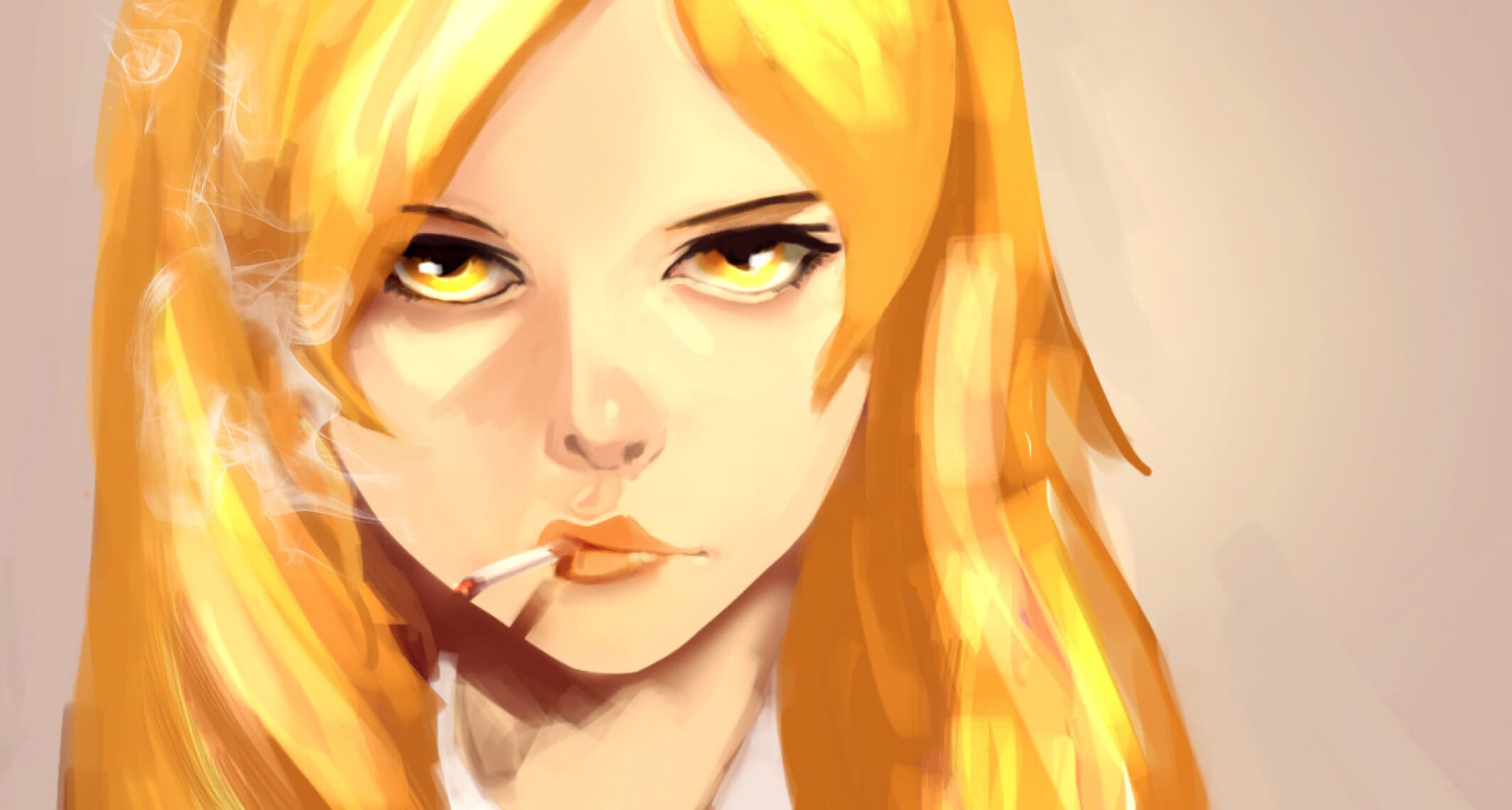
If you want to draw anime characters with real confidence, you need more than scattered YouTube tutorials. You need a clear, ordered roadmap — one that takes you from blank paper to a fully rendered character, step by step.
I’ve been drawing anime-style art for over ten years, and this guide is the resource I wish I’d had when I was starting out. It covers everything: head construction, facial features, body proportions, hands, clothing folds, shading, and digital coloring. Each section gives you the core technique, then points to deeper guides when you’re ready to go further.
Work through it in order. Don’t skip ahead. And above all — draw while you read. Watching is not the same as doing.
🎯 Who this guide is for:
Complete beginners and intermediate artists who feel “stuck” and want a structured path to drawing anime characters from scratch — on paper or digitally.
Part 1 — Understanding Anime Style Before You Draw
Before picking up a pencil, it helps to understand what makes anime art look the way it does. Anime isn’t just “cartoony” — it’s a specific visual language with its own rules for proportion, line quality, and expression.
What Makes Anime Style Unique?
- Large, expressive eyes — The eyes carry almost all emotion. They’re disproportionately large compared to realistic faces.
- Simplified noses and mouths — Noses are often a single line or small triangle. Mouths are minimal unless showing strong emotion.
- Smooth, clean linework — Anime prioritizes clean, confident lines over sketchy texture.
- Stylized anatomy — Heads are larger relative to the body. Limbs are slightly elongated. Details are simplified.
- Flat color with strategic shading — Instead of fully rendered gradients, anime uses flat base colors with crisp shadow shapes.
Understanding these rules means you can break them intentionally later, once you’ve built a foundation. But for now, learning the conventions gives your art a recognizable, polished look faster than trial and error alone.
Recommended Tools for Beginners
| Medium | What You Need | Cost |
|---|---|---|
| Traditional (paper) | Mechanical pencil (0.5mm), eraser, fine-liner pens | Low |
| Digital (tablet) | Wacom Intuus (entry-level), Clip Studio Paint or Krita | Mid |
| iPad | Apple Pencil + Procreate or Clip Studio | Mid–High |
You don’t need expensive tools to start. I started on a cheap sketchbook with a mechanical pencil. Master the basics before investing in gear.
Part 2 — Drawing the Anime Head
Every solid anime drawing starts with the head. If the head looks off, everything else will feel wrong — even if the body, hair, and clothing are drawn well. Get comfortable with head construction before anything else.
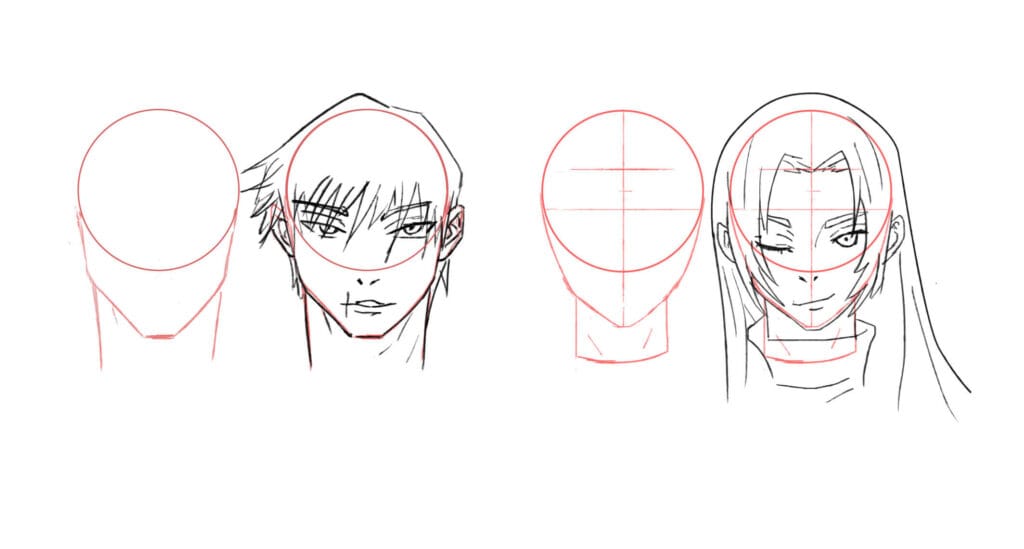
Step 1 — Draw a Circle
Start with a light circle. This represents the upper skull — not the whole head. Don’t press too hard; you’ll adjust it multiple times. The size of this circle determines the scale of the entire character.
Step 2 — Add the Jawline
From the bottom of the circle, bring two angled lines down to a point. For a female character, the jaw is narrow and soft. For a male character, it’s slightly wider and more angular. The chin sits roughly one-third of the circle’s diameter below the circle itself.
Step 3 — Draw the Cross Guidelines
Draw a vertical center line from the top of the skull down through the chin. Then draw a horizontal line across the middle of the circle — this is your eye line. These two lines are your scaffolding. All facial features snap to them.
Step 4 — Place the Features
Eyes sit on or just below the horizontal guideline. The nose falls roughly halfway between the eye line and the chin. The mouth sits about two-thirds of the way between the eye line and the chin. Ears align vertically between the eye and nose lines.
Step 5 — Tilt and Turn the Head
Once you’re comfortable with a front-facing head, practice tilting the center line slightly left or right. This creates a 3/4 view — the most common angle in anime art. The key is keeping the vertical center line curved to follow the surface of the sphere.
📌 Common Mistake:
Most beginners draw the jaw too wide or too long. Remember: the lower face is smaller than the upper skull. When in doubt, make the chin more pointed and the jaw narrower.
Want a deeper dive on facial construction? I cover this in detail in my full anime face tutorial, including how to draw faces from different angles.
Part 3 — Drawing Anime Eyes
Anime eyes are the most expressive — and most practiced — element in the entire style. They come in dozens of variations, but they all share the same underlying structure.
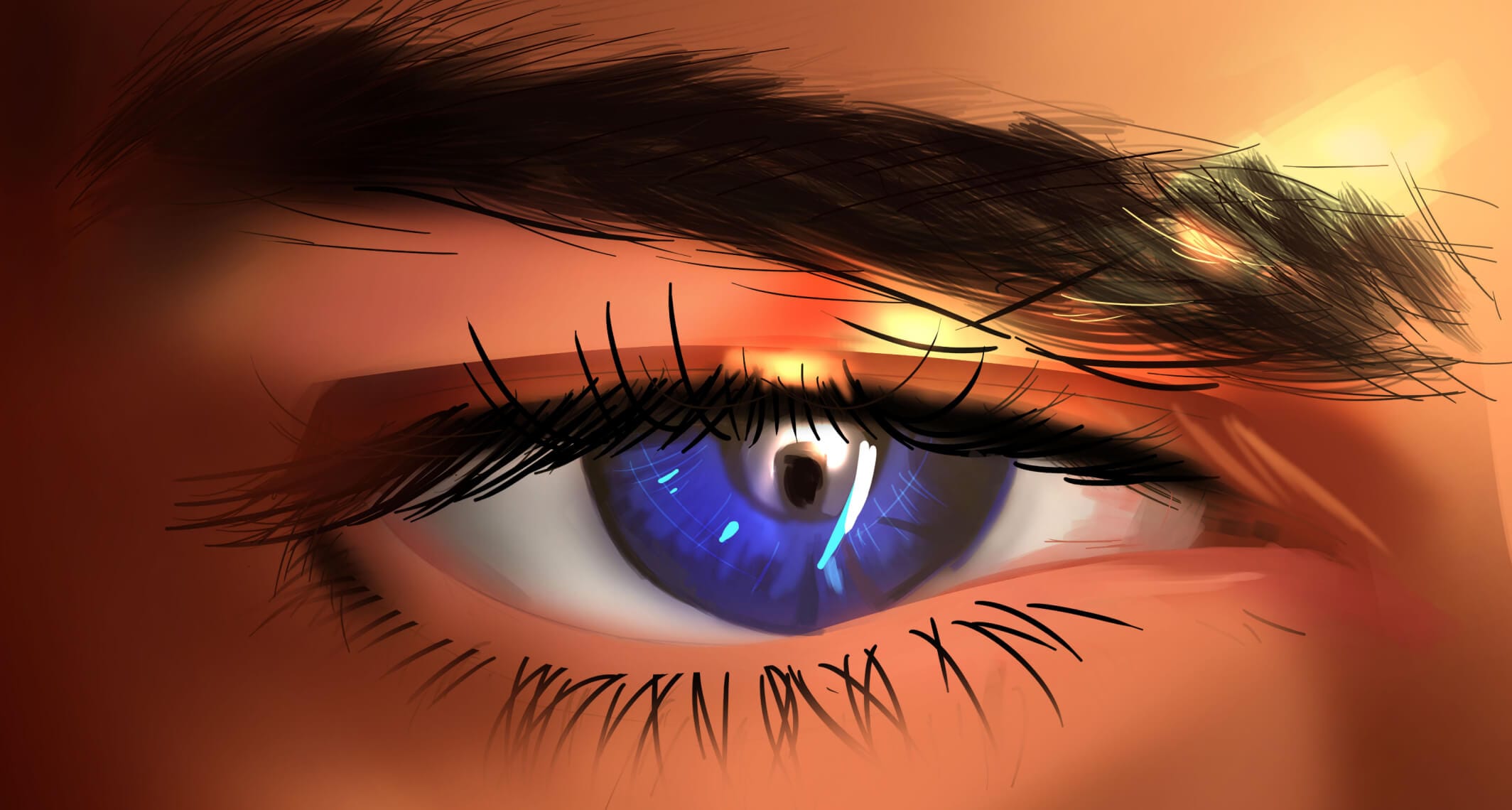
The Anatomy of an Anime Eye
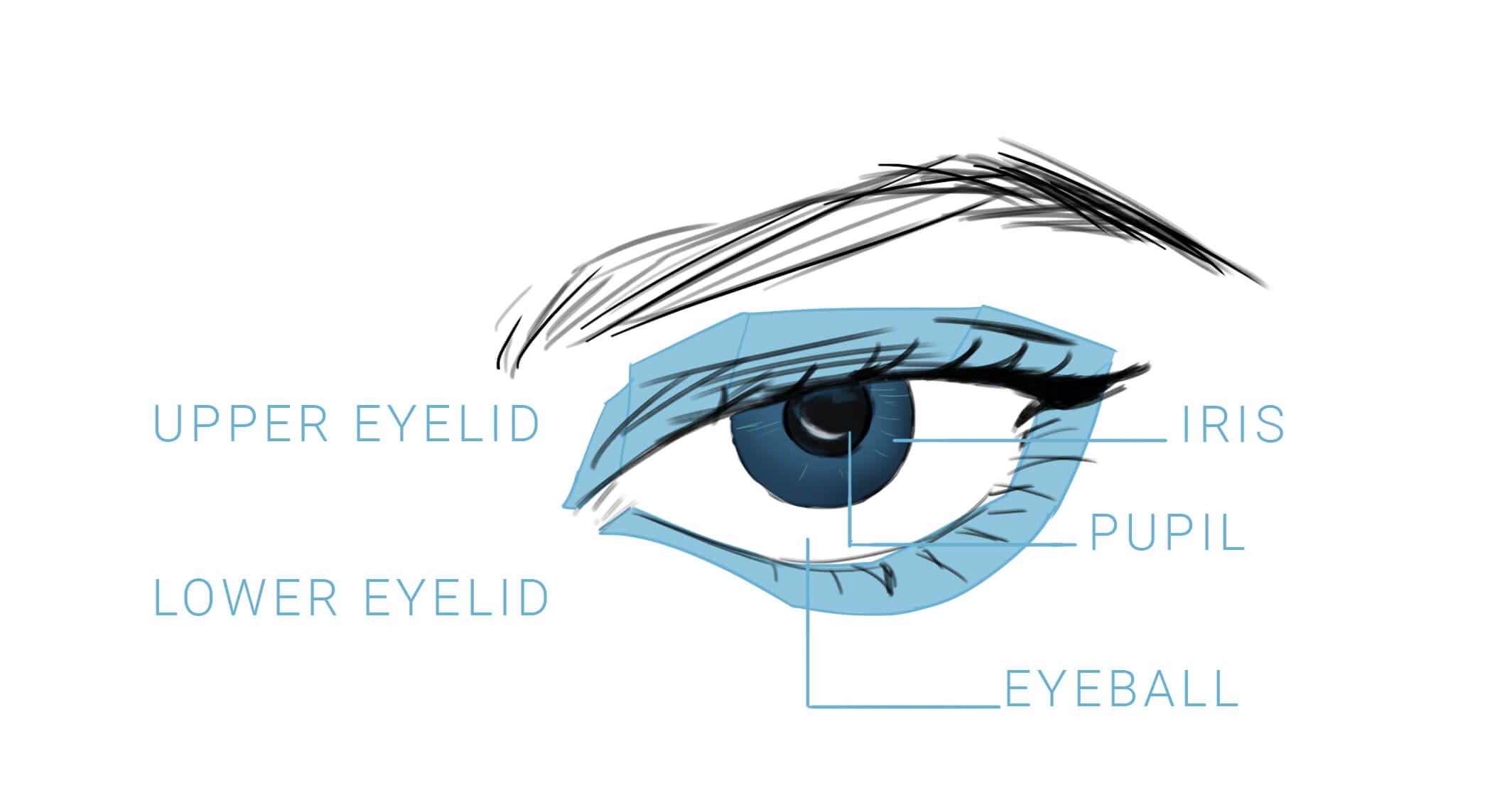
- Upper eyelid line — This is the dominant line. It’s thick, heavy, and curves slightly upward.
- Lower eyelid line — Thinner and shorter than the top line. Often just a hint of a curve.
- Iris — Large and circular (or slightly oval). Usually partially hidden by the upper eyelid.
- Pupil — A smaller circle or oval inside the iris, centered or slightly offset.
- Highlight — One or two white spots. This is what makes anime eyes look alive. Place one large highlight near the top of the iris and an optional smaller one near the bottom.
- Eyelashes — Especially prominent on female characters. They extend from the corners of the upper lid and curve outward.
Eye Styles by Character Type
- Soft, round eyes — Used for gentle, innocent, or young characters.
- Sharp, narrow eyes — Used for serious, cool, or antagonist characters.
- Wide, flat eyes — Common in slice-of-life and comedy styles.
- Downturned eyes — Suggest sadness or melancholy.
Practice drawing ten different eye variations before moving on. Eyes are muscle memory — the more you repeat the shapes, the more natural they’ll look.
Part 4 — Anime Body Proportions
Anime anatomy isn’t realistic, but it is structured. You don’t need perfect knowledge of human anatomy to draw anime well — but you do need to understand the basic rules anime uses.
Head-Based Proportions
Anime characters are typically measured in “heads” — the height of the character’s head used as a unit of measurement:
| Character Type | Total Height in Heads | Notes |
|---|---|---|
| Chibi / Super-deformed | 2–3 heads | Exaggerated, cute, comedic |
| Child character | 4–5 heads | Larger head relative to body |
| Teen / Average character | 6–7 heads | Standard shounen/shoujo proportion |
| Adult / Heroic character | 7–8 heads | Taller, more idealized anatomy |
Key Body Landmarks
- Shoulders — About 2 head-widths across for males, slightly narrower for females.
- Waist — Sits roughly 3 heads down from the top of the skull.
- Hips — About 4 heads down. In female characters, the hips are often drawn wider than the shoulders.
- Knees — At the halfway point of the leg, roughly 5–5.5 heads down.
- Feet — At the base, 6–8 heads down depending on the character type.
Simplified Torso Rules
The torso is one box — don’t overcomplicate it. Draw a trapezoid for the chest (wider at the shoulders, narrower at the waist), then attach a second, smaller box or oval for the hips. The waist connection is the most important shape to get right, especially for dynamic poses.
💡 Practice Tip:
Don’t try to draw full characters right away. Practice drawing the torso and hips separately, 20 times each, in different angles. Once the torso feels natural, adding the limbs becomes much easier.
Part 5 — Hands, Feet, and the Details That Matter
Hands are notoriously difficult — even professional artists agree they never get “easy.” But you can simplify them enormously by breaking them into shapes first.
Drawing Anime Hands in 4 Steps
- Draw a flat rectangle (or slightly rounded square) for the palm.
- Add four slightly curved cylinders for the fingers. They fan out slightly from the knuckle line.
- Add the thumb — it attaches at the side of the palm, lower than you’d expect.
- Refine the outline, erase the construction lines, and add the knuckle creases and fingernail hints.
In anime specifically, hands are often stylized: fingers are slightly longer and more tapered than real hands, and creases are minimal. This actually makes them easier to draw than realistic hands once you get the proportions right.
Drawing Anime Feet
Feet are often hidden by shoes, which is good news for beginners. When you do need to draw a foot, think of it as a wedge shape — wide at the toe end, narrow at the heel, with a triangular arch. Anime feet are usually drawn simplified, without much toe detail unless the scene requires it.
Part 6 — Hair, Clothing, and Character Design
Hair and clothing are where a character’s personality comes through. Getting these right takes your art from “character study” to “fully realized anime character.”
Drawing Anime Hair
The biggest mistake beginners make with anime hair is drawing it strand by strand. Instead, think of hair as sections and clumps. Divide the hair into:
- Front (bangs) — frames the face
- Side sections — fall alongside the face and neck
- Back/crown — the main volume, flows from the crown of the skull
Each section is drawn as a large shape first, then broken into flowing sub-sections. Think of each clump as a ribbon flowing in space — it curves, overlaps, and catches light at the tips.
I have a dedicated step-by-step guide on this: How to Draw Anime Hair.
Drawing Clothing and Folds
Clothing folds are governed by gravity and tension. Fabric pulls toward anchor points (shoulders, hips, joints) and hangs freely between them. The key types of folds to learn:
- Tension fold — fabric stretching between two points, like across a bent elbow
- Hanging fold — fabric falling freely from one anchor, like a cape
- Compression fold — fabric bunching up where it’s squished, like around a bent knee
Don’t add too many folds. Anime clothing is stylized — use 3–5 fold lines maximum and make each one intentional. learn more about How to Draw Clothing Folds.
Part 7 — Shading and Coloring Your Anime Character
Shading is what separates flat drawings from ones that feel three-dimensional. Anime uses a specific shading style called cel shading — hard-edged shadows with flat fill, named after the traditional celluloid animation process.
How to Cel-Shade in 4 Steps
- Pick your light source — Decide where light is coming from (usually upper-left or upper-right) and stick to it consistently across the entire character.
- Fill flat base colors — Fill each element (skin, hair, clothing) with a single flat base color. No gradients at this stage.
- Add shadow shapes — On a new layer set to Multiply, paint hard-edged shadow shapes on every surface facing away from the light. Shadow color is usually a cooler, darker version of the base color.
- Add a highlight layer — On a layer set to Screen or Add, paint sharp highlights on the most lit surfaces — the top of the hair, the nose bridge, the shoulders.
Color Temperature in Anime
A powerful technique professionals use: make your shadows slightly cooler in hue than the base, and your highlights slightly warmer. This creates visual depth even when shadows are flat shapes. For example, if your base skin is a warm peach, shade it with a cooler rose-pink rather than a darker version of the same orange.
🎨 Recommended Software:
Clip Studio Paint
is the industry standard for anime-style art.
Krita
is a free alternative that’s excellent for beginners.
Procreate
(iPad only) is great for sketching and coloring on the go.
Part 8 — Building a Practice Routine That Actually Works
Improvement in art isn’t about talent — it’s about deliberate, consistent practice. Here’s a simple weekly structure that works for beginners:
| Day | Focus | Time |
|---|---|---|
| Monday | Head construction + facial proportions | 30 min |
| Tuesday | Eyes — draw 10 different variations | 30 min |
| Wednesday | Full body gestures (loose and fast) | 30 min |
| Thursday | Hands — draw 10 hand poses | 30 min |
| Friday | Hair and clothing on a full character | 45 min |
| Saturday | Full character from scratch + shading | 60–90 min |
| Sunday | Rest or free drawing — whatever you enjoy | Optional |
This adds up to about 3.5–4 hours per week. That’s enough to see noticeable improvement within 4–6 weeks if you stay consistent.
The artists who improve fastest aren’t the ones who draw the longest — they’re the ones who draw the most consistently. 30 minutes every day beats 4 hours on weekends.
Part 9 — Common Beginner Mistakes (and How to Fix Them)
- Skipping construction lines — Drawing “by eye” without guidelines leads to lopsided faces and crooked bodies. Always build on a skeleton first.
- Pressing too hard too early — Start every drawing light. Commit to lines only once the overall proportions are confirmed.
- Copying without understanding — Tracing other artists’ work is fine for practice, but make sure you also draw from imagination. Copying builds observation; drawing from imagination builds understanding.
- Avoiding what you find hard — Most artists avoid drawing hands because they’re difficult. That means most artists draw bad hands. Lean into your weak areas.
- Comparing your early work to professionals — You’re seeing someone’s 10-year result and comparing it to your day-one attempt. That comparison will only discourage you. Compare your art to your own work from 3 months ago instead.
- Not finishing pieces — It’s tempting to start new sketches constantly. Force yourself to take at least one drawing per week to a finished state, including shading and color. Finishing teaches you things that sketching never will.
Frequently Asked Questions
How long does it take to learn to draw anime?
It depends on how often you practice, but most beginners see solid, recognizable anime characters within 3–6 months of consistent daily practice. Getting “good” — meaning clean, expressive characters in multiple poses — typically takes 1–2 years of regular work. The pace varies widely, but everyone improves if they keep drawing.
Do I need to learn realistic drawing first?
Not necessarily. Many successful anime artists learned anime-style art directly without going through a realism phase. However, understanding basic realistic proportions — how the human head works, where joints sit, how fabric falls — does make anime drawing faster to learn. You don’t need to master realism; just a basic understanding helps a lot.
What’s the best drawing software for anime art?
Clip Studio Paint is the most widely used professional tool for anime-style illustration, and it’s reasonably priced. Krita is a free, open-source option that’s excellent for beginners. If you’re on an iPad, Procreate is intuitive and great for sketching. All three support the techniques in this guide. Start with whatever you can access and upgrade later if needed.
Do I need a drawing tablet for digital anime art?
Yes — a drawing tablet makes digital art dramatically easier than using a mouse. You don’t need an expensive one to start. An entry-level Wacom Intuos (around $80) is more than enough for beginners. The pressure sensitivity lets you vary line weight naturally, which is essential for anime linework.
How do I develop my own anime art style?
Your style develops naturally over time as you study and absorb influences you love. To accelerate it: study 5–10 anime artists you admire and identify what you love about each one. Then consciously combine those elements in your own work — maybe one artist’s eye style, another’s body proportions, another’s color palette. Over time, through practice, these influences blend into something that starts to feel uniquely yours.
Is it okay to use reference images when drawing anime?
Absolutely — and it’s strongly encouraged. Professional illustrators use references constantly. Using a reference isn’t cheating; it’s training your eye to see correctly. Use reference photos for body poses and anatomy, and use anime art you admire as style references. Over time, your visual library grows and you rely on references less automatically.
What should I draw when I have no ideas?
Use prompts. Sites like PicturePunches or r/ArtPrompts generate daily drawing prompts. You can also do studies: pick a character from an anime you like and try to redraw a scene in your own style. Daily character design challenges — designing a character based on a random job, color palette, or emotion — are also great for building both creativity and skill at the same time.
How do I draw anime characters from different angles?
This comes down to understanding the 3D form of the head and body, not just the flat outline. Practice drawing simple box and sphere shapes from multiple angles first. Then apply that spatial thinking to your characters. The cross guidelines on the face (the vertical center line and horizontal eye line) are especially helpful — they curve with the surface of the head and help you place features accurately at any angle.
Why do my anime eyes look uneven?
This is the most common beginner problem with anime faces. The fix is to always use horizontal guidelines before drawing eyes — never place them freehand. Draw a faint horizontal line across the face at eye level, then build each eye symmetrically on either side of the vertical center line. Also check that both eyes are the same distance from the center line and the same height from the chin.
What to Learn Next
This guide is your roadmap. Now that you have the full picture, here are the next deep-dives to explore on this site:
- How to Draw Anime Faces — Step by Step
- How to Draw Anime Hair
- How to Draw Anime Clouds
- Color Theory for Artists
- How to Draw Anime Fire
And remember: this page is your hub, not your finish line. Pick one section, focus on it for a week, and then move on. Draw → mess up → fix it → repeat. That’s the whole process.
Good luck — and keep drawing. 🖊
Discover More Posts
Keep exploring stories, insights, and creative notes from my journey as an artist. Check out the latest blog entries and find topics that inspire your own process.
5 Hidden Art Career Killers That Stop Most Artists Before They Even Start — And How to Beat Them
Learn to draw anime-style clouds with this easy, step-by-step cloud tutorial. You’ll pick up tips on shapes, color, and composition—plus get free cloud brushes to use in your own art.

Sketching vs. Drawing: 5 Powerful Insights Every Artist Should Know
Learn the key differences between sketching and drawing—how detail, speed, tools, and intent separate the two and when to use each in your art practice.
How to Find Your Art Style in 3 Simple Steps
Learn how to find your unique art style through a clear three-step process. Discover how to collect inspiration, analyze your influences, and build your own signature look with deliberate practice.