
By:
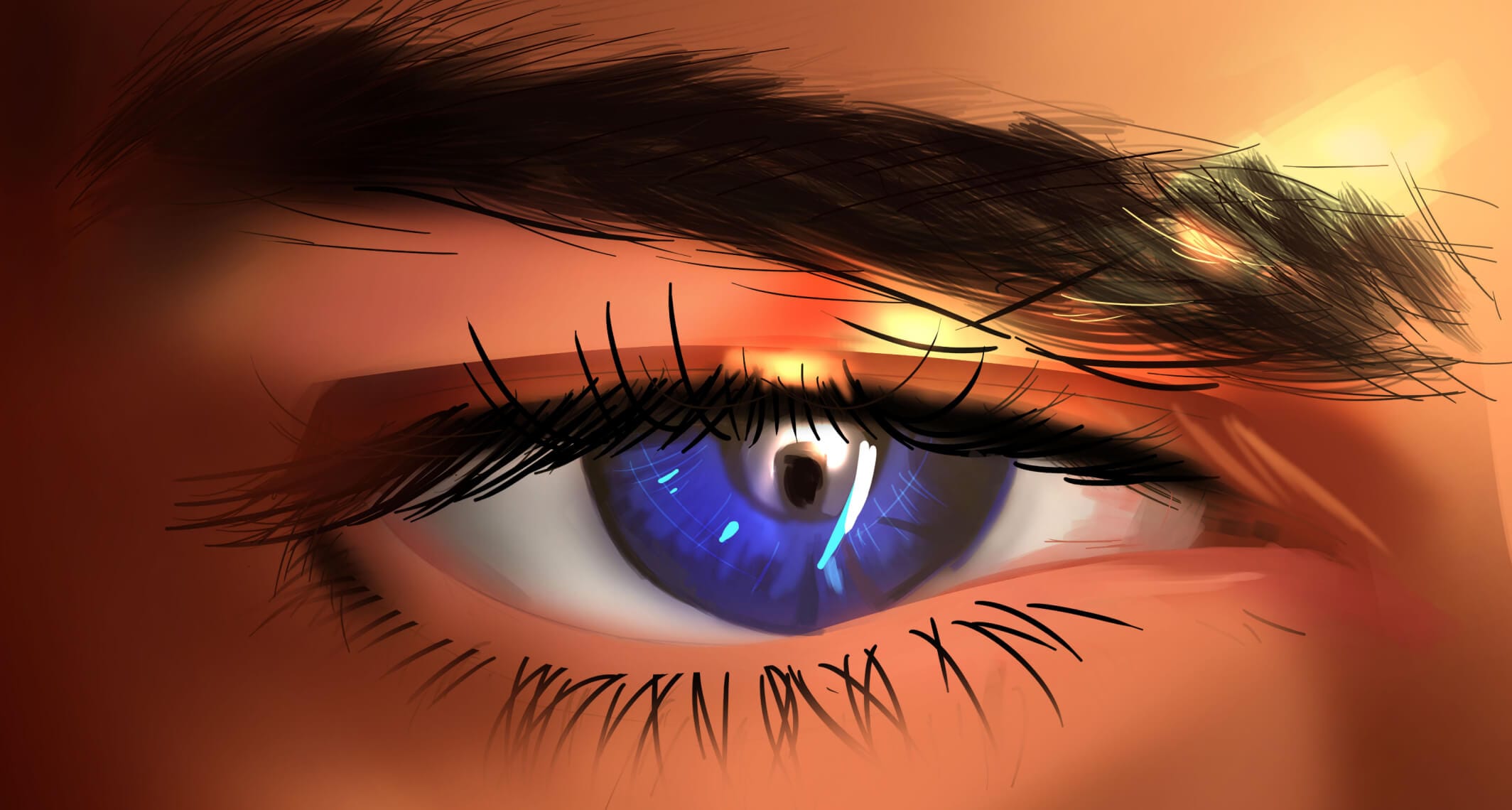
Anime eyes are the most practiced element in the entire style — and for good reason. They carry almost all of a character’s emotion, personality, and visual identity. Get them right and your character comes alive. Get them wrong and everything else suffers, no matter how well-drawn the rest of the face is.
I’ve drawn anime eyes more times than I can count. They went from lopsided and flat to expressive and confident — not through talent, but through understanding the underlying structure and repeating it enough times that it became muscle memory.
This guide covers everything: the anatomy of an anime eye, a complete step-by-step drawing process, the most common eye styles and when to use them, how to draw eyes for different emotions, how to color and shade them digitally, and all the mistakes beginners make (and how to fix them). Work through it with a pencil in hand — watching alone won’t cut it.
📌 What you’ll need:
Pencil and sketchbook (traditional) or any drawing software with a tablet (digital). A mechanical pencil (0.5mm) is ideal for traditional work. For digital, Clip Studio Paint, Krita, or Procreate all work perfectly for this guide.
Part 1 — Understanding the Anatomy of an Anime Eye
Before you draw a single line, you need to understand what an anime eye is actually made of. Every variation — from cute and round to sharp and intense — is built from the same set of components. Learn these and you can draw any eye style, not just copy one.
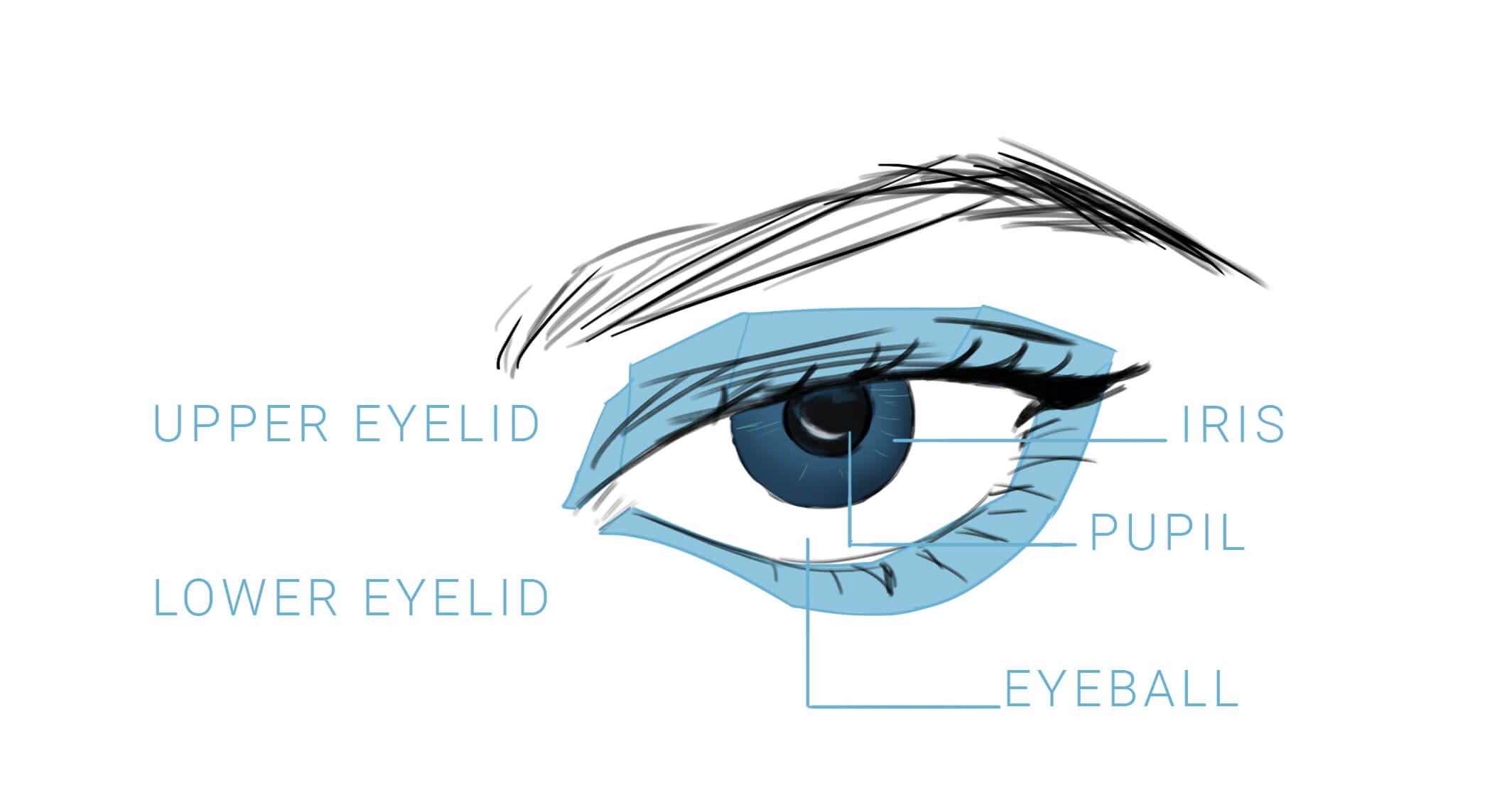
The 7 Components of an Anime Eye
- Upper eyelid line — The single most important line in the eye. It’s thick, dark, and curves gently. The angle and weight of this line defines almost everything about the character’s expression and personality. A heavy, angular upper lid reads as intense or serious. A softer, more curved one reads as gentle or youthful.
- Lower eyelid line — Much thinner and shorter than the upper line. In many anime styles, the lower lid is just a subtle curve or even a single short horizontal mark at the outer corner. Don’t overdraw it — the upper lid should always dominate.
- Iris — The large colored circle that makes anime eyes so distinctive. In anime, the iris is disproportionately large — much bigger than a realistic eye. It’s usually partially hidden by the upper eyelid. The shape can be circular, oval, or slightly rectangular depending on the style.
- Pupil — A smaller circle or oval centered within the iris. In most anime styles, the pupil is quite large relative to the iris, giving characters a soft, expressive look. For sharper or more sinister characters, the pupil can be narrow or slit-shaped.
- Upper shadow — A gradient or flat shadow band across the top of the iris, directly under the upper eyelid. This is what gives anime eyes their depth. Without it, the iris looks flat and lifeless. This shadow is typically the darkest area of the eye outside the pupil itself.
- Highlights — The feature that makes anime eyes feel alive. Placed as white spots within the iris (usually one large primary highlight near the upper portion, and one or two smaller secondary highlights). The position of highlights affects where the eye appears to be looking. Remove the highlights and the eye instantly looks dead.
- Eyelashes — Particularly prominent on female or expressive characters. They extend from the corners of the upper lid (and sometimes the outer corner of the lower lid) and curve outward. In many anime styles, lashes are drawn as thick extensions of the eyelid line rather than individual strands.
💡 Key Insight:
Anime eyes are not anatomically correct — they’re a visual shorthand for emotion and character. The iris is too large, the highlights are too bright, and the lashes are too dramatic. That’s the point. Understanding what’s being exaggerated (and why) is what lets you make intentional choices instead of just copying.
Part 2 — Drawing an Anime Eye Step by Step
This is the core technique. Follow every step in order, keep your lines light until the final pass, and draw along as you read — don’t just skim.
Step 1 — Draw the Upper Eyelid Line
Start with a single curved line. This is the upper eyelid — the foundation of the entire eye. It should be thickest in the middle and taper toward both ends. The curve is gentle, not a semicircle. Think of it as a wide, shallow arc that drops slightly on both ends.
At the inner corner (closest to the nose), the line ends with a small downward hook or teardrop shape. At the outer corner, it extends slightly further and can angle upward slightly for a sharper look, or stay level for a softer look. Don’t press hard — keep this light for now.
Step 2 — Add the Lower Eyelid
Below the upper lid, draw a much lighter, thinner curve for the lower eyelid. This line is short — it doesn’t run the full width of the upper lid. Typically it starts from about one-third of the way in from the outer corner and curves gently toward the inner corner without touching it. Leave a small gap at both ends — the eye shouldn’t be completely enclosed.
In many female anime styles, the lower lid is barely there — just a hint. In male or more angular styles, it’s slightly more defined. Don’t overthink it. When in doubt, make it thinner and shorter.
Step 3 — Draw the Iris
Inside the space created by the eyelids, draw a large circle or oval for the iris. It should be significantly larger than feels “realistic” — that’s intentional. The top of the iris should be cut off by the upper eyelid line, with about one-fifth to one-quarter of the iris hidden behind it. The bottom of the iris may or may not touch the lower eyelid depending on how open the eye is.
The iris should sit roughly centered horizontally, with equal space to the inner and outer corners. If the iris touches or almost touches the upper lid and floats well above the lower lid, the eye reads as open and awake. If the iris is more enclosed by both lids, it reads as tired or sleepy.
Step 4 — Add the Pupil
Draw a smaller circle centered within the iris. The pupil in anime is usually large — taking up about 40–50% of the iris diameter. A larger pupil creates a softer, more innocent expression. A smaller pupil creates a sharper, more intense look. Keep it perfectly circular for most styles; elongate it vertically for a more intense or dramatic character.
Step 5 — Place the Upper Shadow
At the top of the iris, directly under the upper eyelid, shade in a band of dark value. This is the cast shadow from the eyelid falling onto the eyeball. It’s darkest right at the top and fades as it moves downward. In traditional art, use your pencil at a low angle and shade gradually. In digital art, use a Multiply layer and paint a dark, slightly transparent shape across the top third of the iris.
This step is what creates the illusion of a 3D sphere inside the eye socket. It’s often skipped by beginners and is the single biggest factor that separates flat-looking anime eyes from ones that feel dimensional.
Step 6 — Add the Highlights
Place one large highlight dot in the upper portion of the iris — slightly off-center, usually toward the upper-left or upper-right. This represents the reflection of the primary light source. Then add one or two smaller secondary highlights in the lower portion of the iris, offset from the primary.
In traditional art, plan these as white spaces you leave empty while shading. In digital art, use an opaque white brush on a top layer. The exact shape can be a circle, teardrop, crescent, or irregular polygon — experiment and develop your own signature highlight style over time.
Where you place the highlight affects where the eye seems to look. A highlight in the upper-left corner with a pupil slightly right of center creates the impression the character is looking slightly to the right.
Step 7 — Add Eyelashes and Refine the Lid
On the upper eyelid, add eyelashes extending from the outer corner, curving outward and upward. Don’t draw individual hair strands — draw them as solid extensions of the lid line, getting progressively shorter as they move toward the inner corner. For a female character, make these more dramatic and numerous. For a male character, they’re often minimal or limited to the corners only.
Now is also the time to darken and thicken the upper eyelid line — pressing harder or adding a second pass with a darker stroke. The upper lid should always be the darkest, heaviest line in the eye.
Step 8 — Final Shading and Iris Details
Add depth inside the iris by varying the value from dark (top, around the pupil edge) to slightly lighter (middle) to a small bright area at the very bottom of the iris — a secondary light reflection. This light-dark-light value progression is what makes anime eyes feel glassy and luminous rather than flat.
Optional: add thin radial lines within the iris, flowing outward from the pupil like spokes. These iris texture lines are common in more detailed anime styles and add realism without breaking the stylized look. Keep them light and secondary to the main value shapes.
Part 3 — Anime Eye Styles by Character Type
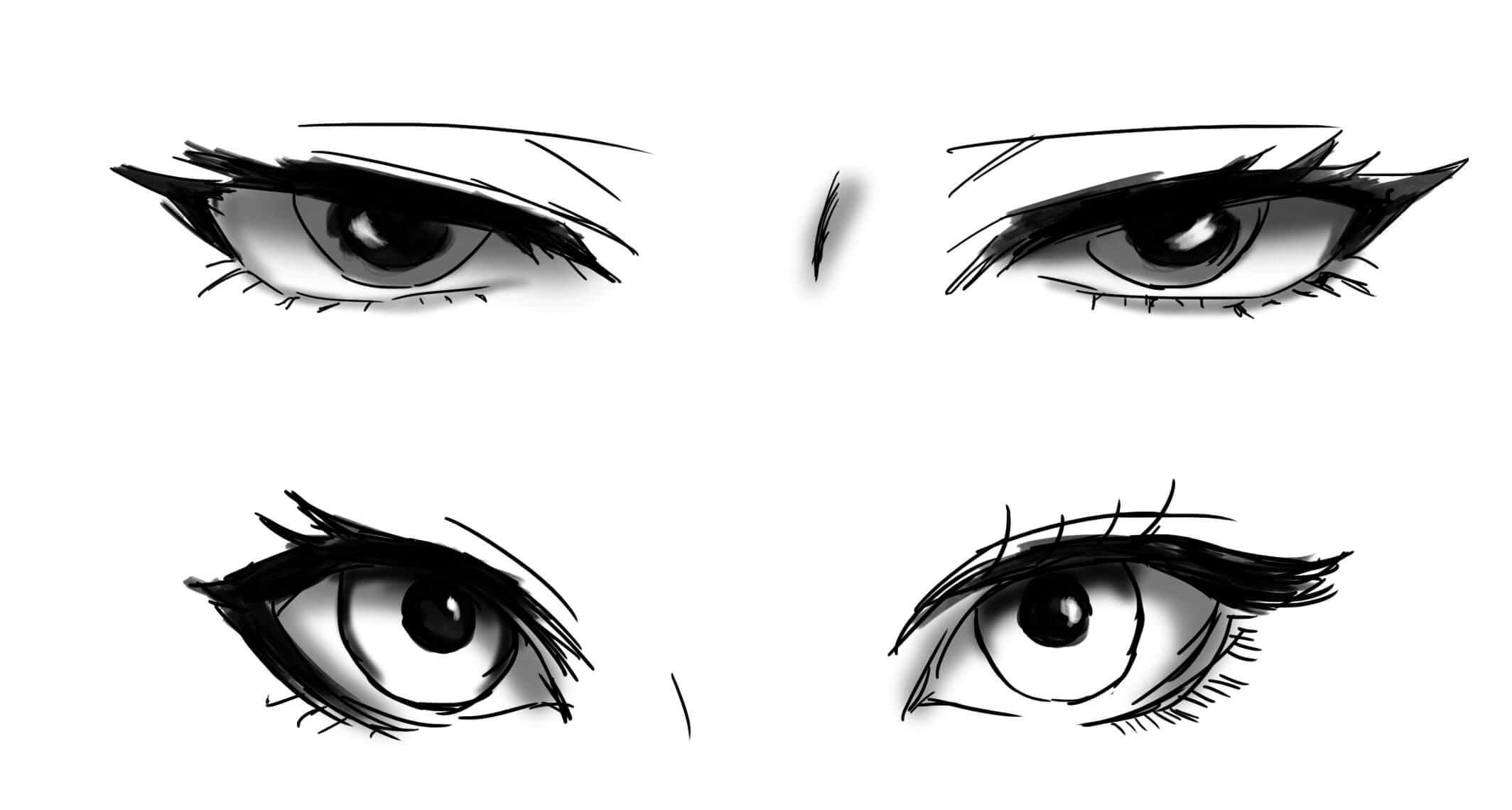
There’s no single “correct” anime eye style — the shape, size, and detail level you use should reflect the character’s personality, role, and the overall tone of your art. Here are the most common archetypes:
Soft Round Eyes — The Innocent/Youthful Type
Large, perfectly circular irises with a soft upper lid curve and minimal angularity. Lashes are present but not dramatic. Highlights are large and prominent. Used for gentle protagonists, younger characters, or anyone meant to seem approachable and kind. Common in shoujo and slice-of-life styles.
Key features: Wide circular iris, full lower lash line, large double highlights, very soft upper lid curve
Sharp Narrow Eyes — The Cool/Intense Type
The iris is taller than it is wide, or the eyelids narrow the visible iris significantly. The outer corner of the upper lid angles upward sharply. Lower lash line is minimal or absent. Highlights are smaller and more angular. Used for serious, stoic, or antagonist characters. Common in action series and seinen styles.
Key features: Narrow visible iris, strong upward angle at outer corner, small angular highlights, heavy eyelid line
Downturned Eyes — The Gentle/Melancholy Type
The outer corner of the upper lid droops slightly downward instead of rising. This creates an instantly soft, kind, or sad impression. Popular for gentle male characters (bishounen type) and characters with a melancholy or introspective personality. Often paired with softer, warmer eye colors.
Key features: Outer lid corner points downward, large soft iris, visible lower eyelid curve, warm highlight placement
Wide Flat Eyes — The Energetic/Comedic Type
The iris is wide but not very tall — flattened slightly at the top and bottom. The upper lid is less curved, almost straight. This creates a bright, energetic expression ideal for upbeat, funny, or hyperactive characters. Common in comedy and isekai styles.
Key features: Wide flat iris, minimal lid thickness, simple round highlights, thin lower lid line
Half-Closed Eyes — The Bored/Confident Type
The upper lid covers more of the iris than usual — typically half or more. This creates a heavy-lidded, sleepy, or supremely confident expression. Often used for laid-back side characters, intellectuals, or characters who are too cool to be impressed by anything. The pupil is usually fully visible despite the heavy lid.
Key features: Upper lid covers 40–60% of iris, flat or slightly downward lid angle, smaller visible iris area, minimal lash detail
Slit-Pupil Eyes — The Supernatural/Threatening Type
The pupil is vertically elongated to a thin slit rather than circular. This instantly reads as inhuman, predatory, or supernatural. Used for demons, dragons, magic-users, or morally ambiguous characters who are meant to feel dangerous or otherworldly.
Key features: Vertical slit pupil, sharper lid angles, high-contrast iris colors (often gold, red, or purple), minimal soft highlights
Part 4 — Drawing Eyes for Different Emotions
The real power of anime eyes is how they communicate emotion. The same basic eye structure transforms completely depending on small adjustments to the eyebrow, eyelid position, and pupil size. Here’s how to draw the most common expressions:
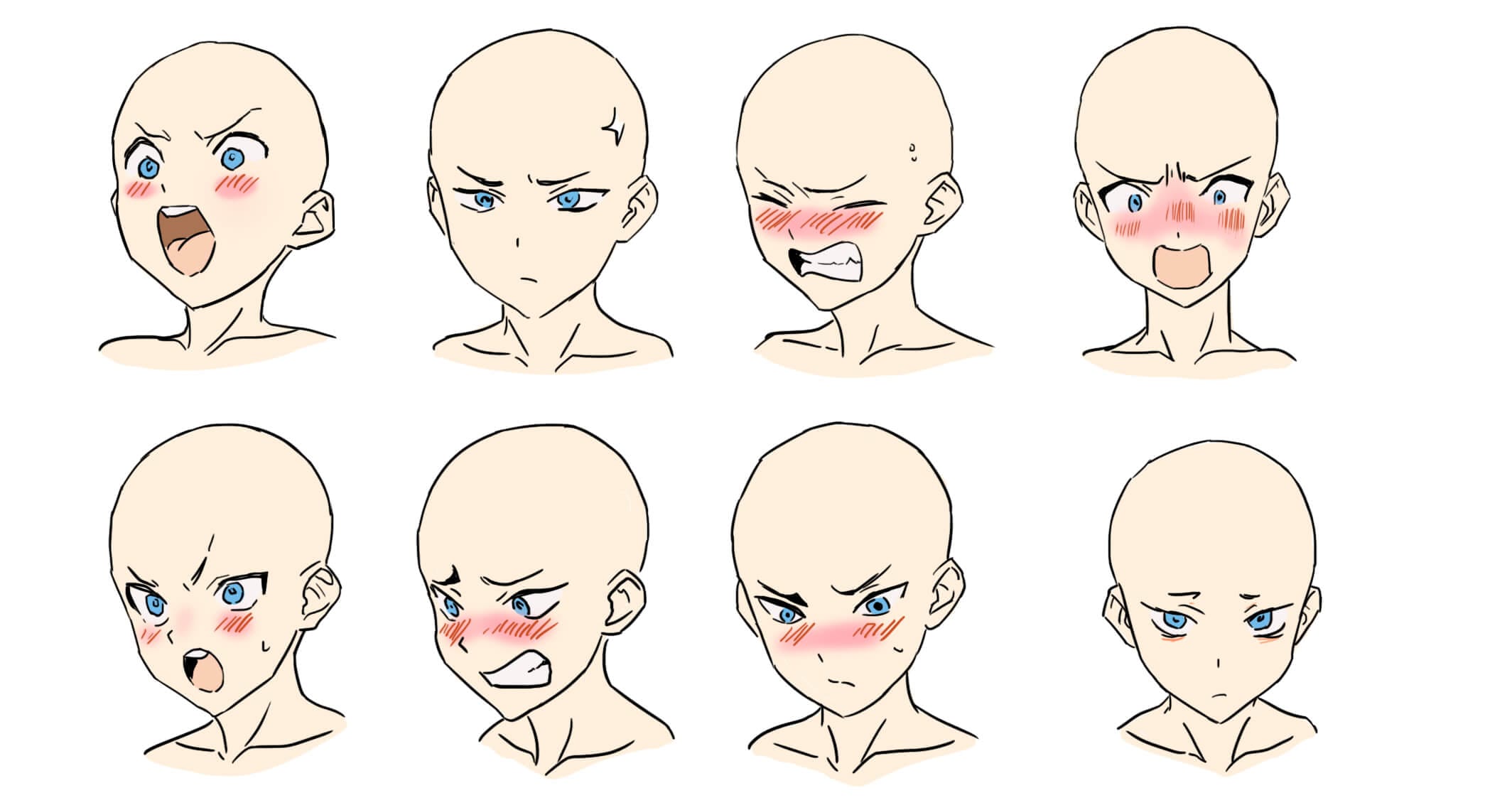
| Emotion | Eyebrows | Upper Lid | Pupil / Iris | Lower Lid |
|---|---|---|---|---|
| Happy | Slightly raised, gentle curve | Normal or slight downward curve (squinting) | Normal or large | Curved upward (smile shape) |
| Sad | Inner ends raised, outer ends dropped | Narrowed slightly | Large, watery | Curved upward, puffy |
| Angry | Inner ends sharply lowered, V-shape | Inner corner lowered, eye narrowed | Small, constricted | Tension marks optional |
| Surprised | Raised high, arched | Wide open, upper lid rises | Very large, dilated | Visible below iris |
| Scared | Raised, inner ends angled up | Wide open | Very large or very small (shock) | Visible below iris, shaking |
| Disgusted | One raised, one lowered (asymmetric) | One narrowed | Normal, sideways glance | One curled |
| Determined | Low and flat, or slightly furrowed | Slightly lowered, intense | Normal to small | Tight |
| Embarrassed | Normal or slightly raised | Slightly lowered, looking down | Looking downward | Slightly curved up |
📌 The Most Important Rule for Expressions:
Eyebrows do as much work as the eyes themselves. Always adjust both together. An eye that’s wide open with normal eyebrows reads differently than the same eye with raised, inner-tilted brows. Study how real face muscles move — even in stylized art, the underlying emotional logic stays the same.
Part 5 — Drawing Anime Eyes on a Face (Placement and Symmetry)
A great eye drawn in isolation doesn’t help if it looks wrong on a face. Placement and symmetry are where most beginners struggle — and where guidelines save you every single time.
Where Eyes Sit on the Head
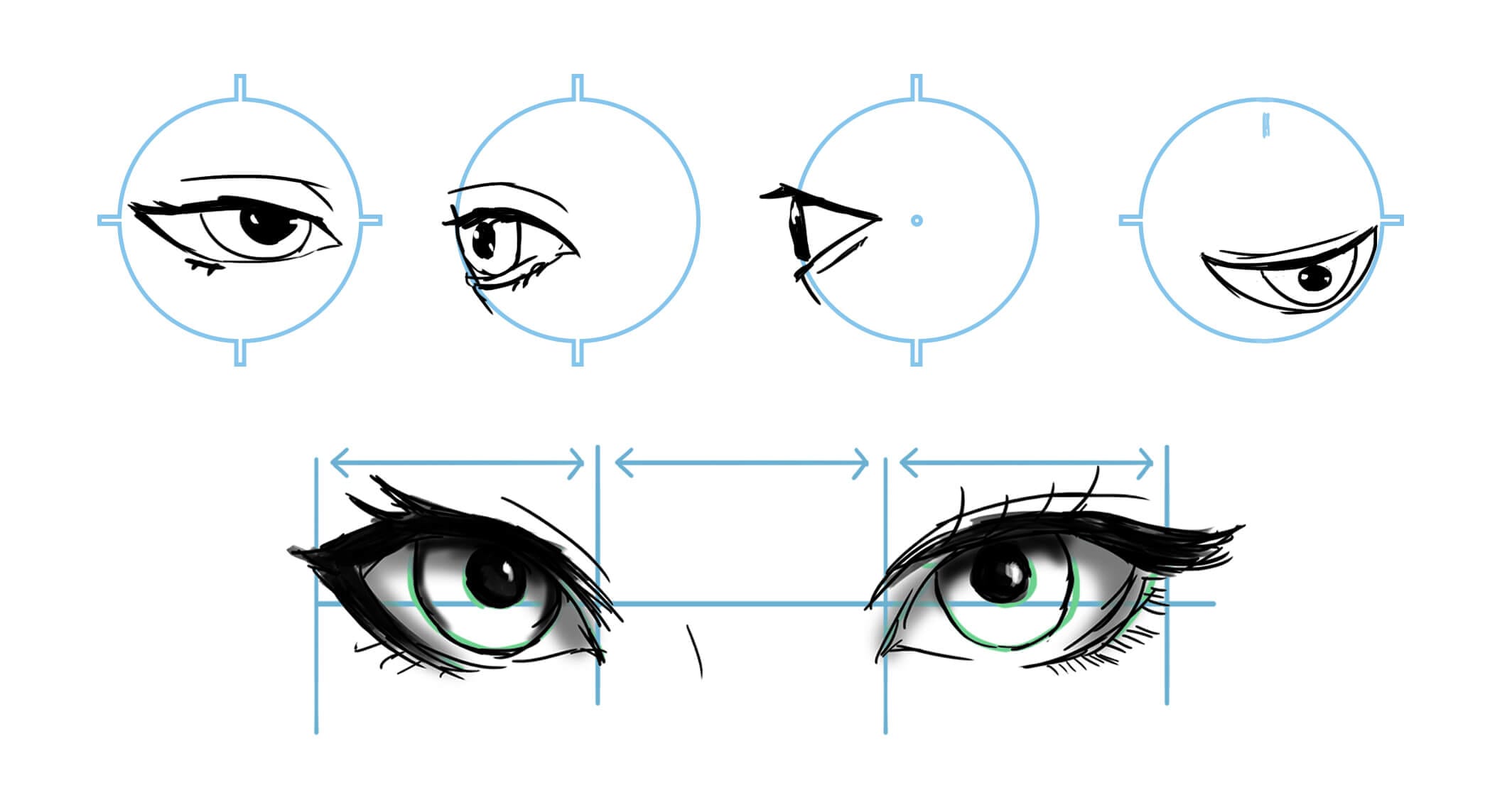
Anime eyes sit on or just below the horizontal center line of the head — slightly lower than you’d expect. Draw your head construction circle, add the jaw, then draw a horizontal guideline at the halfway point of the total head height (circle + jaw). Eyes go on or just below that line.

Eye Spacing
The classic rule: leave roughly one eye-width of space between the two eyes. So if you drew the left eye, the right eye starts one eye-width to the right. This feels exaggerated at first but is correct for most anime proportions. Eyes that are too close together look aggressive; eyes too far apart look unfocused.
Drawing Both Eyes Symmetrically
Asymmetric eyes are the most common beginner problem. The fix is always guidelines:
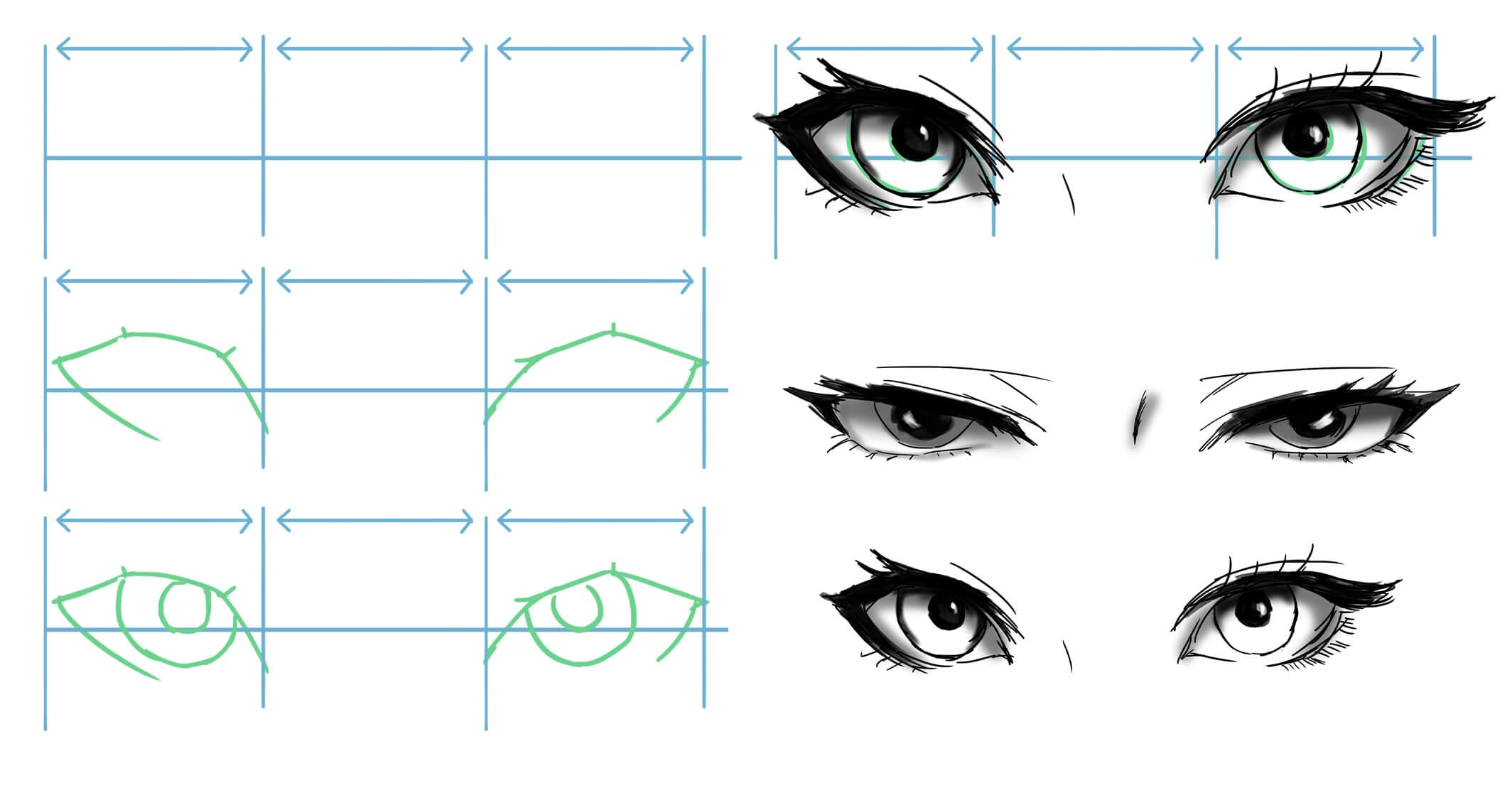
- Draw a horizontal guideline for the eye level — both eyes sit on this line, not above or below it.
- Mark the vertical center line of the face. Each eye should be the same distance from this center line.
- Lightly mark the width of each eye before drawing any details. Confirm they match before proceeding.
- Draw the irises on both eyes before adding any details — make sure they’re the same size and at the same height.
- Add details to both eyes simultaneously (lid details on both, then highlights on both, etc.) rather than finishing one eye completely before starting the other. This helps you catch asymmetry early.
Eyes at Different Angles
When the face turns to a 3/4 or profile view, the eyes change shape:
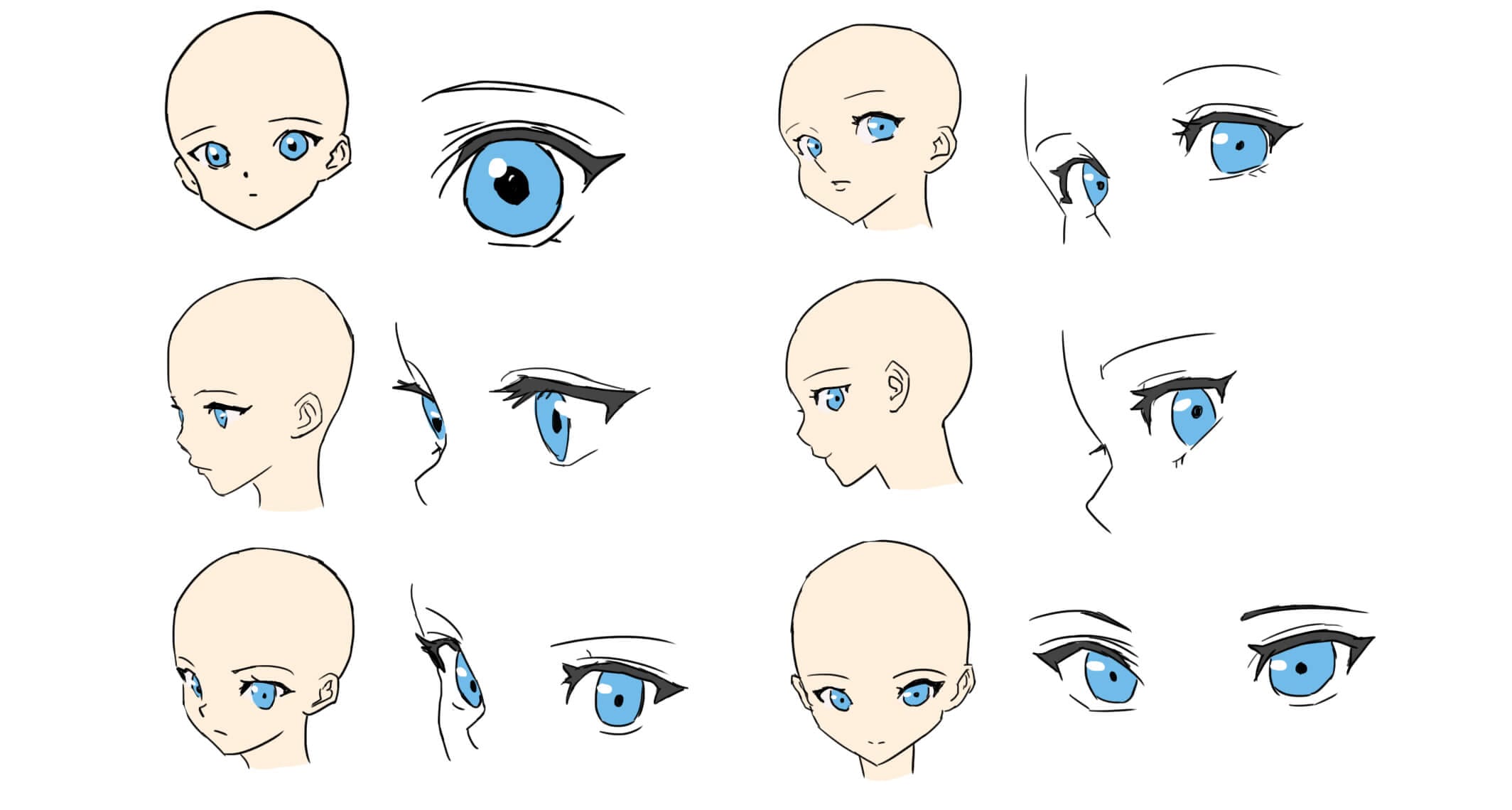
- 3/4 view: The far eye (on the turned side of the face) appears narrower — compressed horizontally. The near eye stays roughly normal. Both eyes still sit on the same horizontal guideline, which now curves with the surface of the face.
- Side/profile view: The eye becomes a simplified wedge or triangle shape. You only see the near side. The iris becomes an oval or thin sliver. The upper lash line is still the dominant element.
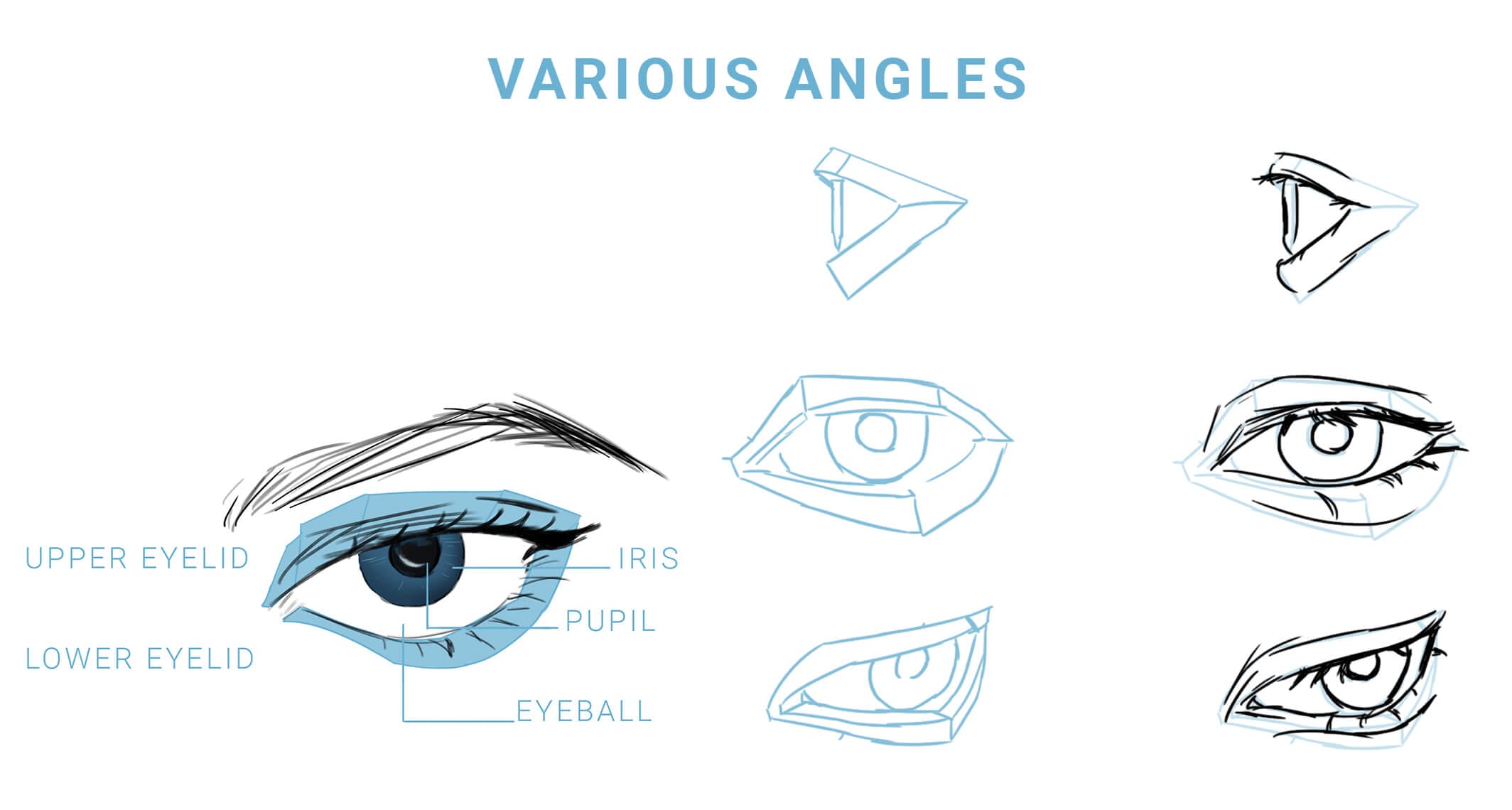
Part 6 — Coloring and Shading Anime Eyes Digitally
Eye coloring is where digital art really shines. The process of building up glassy, luminous anime eyes digitally is one of the most satisfying techniques to master. Here’s the full workflow:
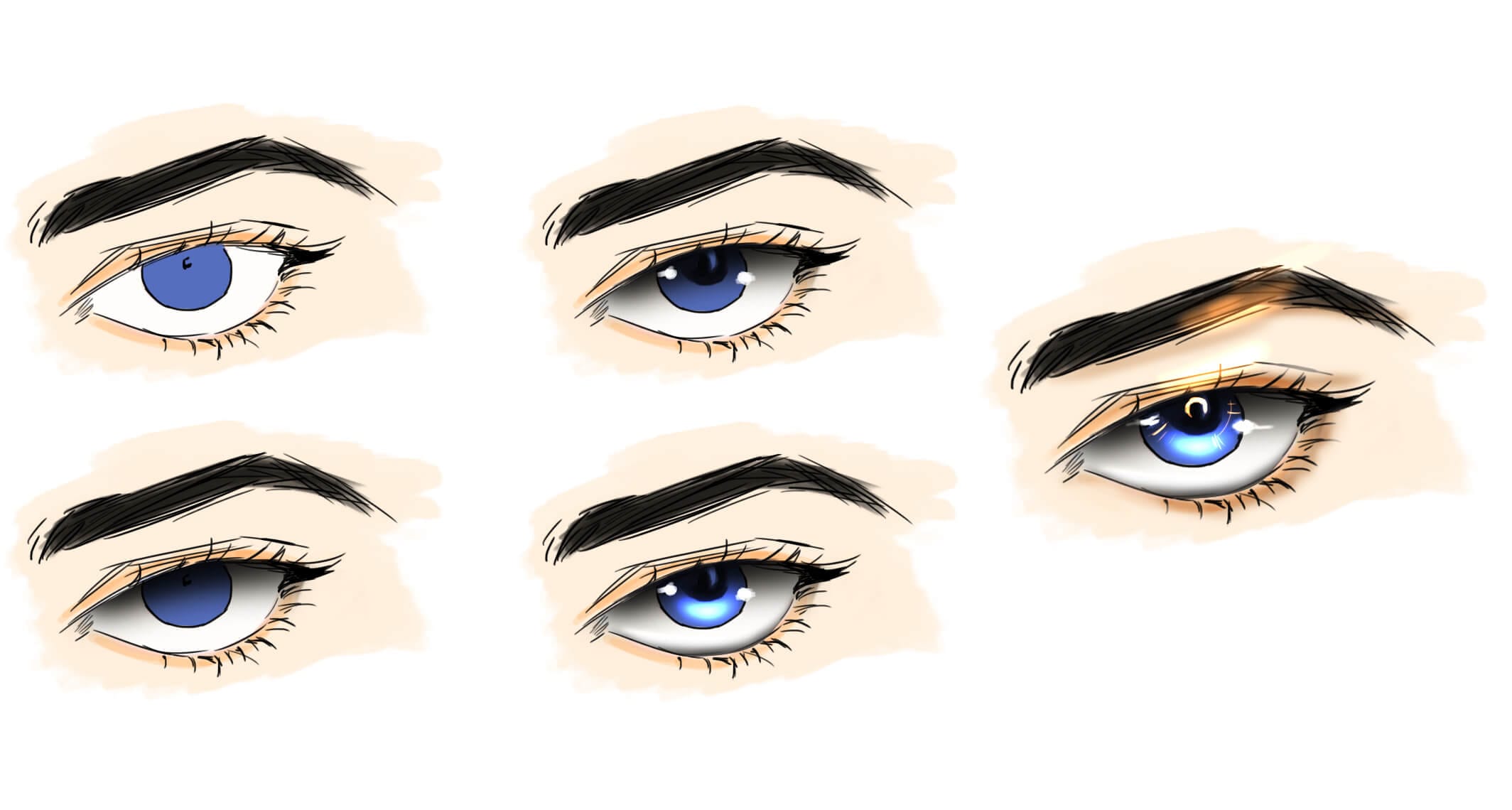
Stage 1 — Base Color Fill
On a layer below your linework, use the lasso or wand tool to select the iris area and fill it with your base color. This is a flat, mid-tone version of the eye color — not too light, not too dark. For blue eyes, a clear medium blue. For brown, a warm mid-brown. Leave the pupil area empty or fill it black separately.
Stage 2 — Upper Shadow (Multiply Layer)
Create a new layer clipped to the base color layer and set it to Multiply blend mode. With a soft brush, paint a deep shadow across the top 30–40% of the iris. This is the eyelid casting shadow onto the eyeball. The color should be a darker, cooler version of your base — for blue eyes, use a deep navy or indigo. For brown, use a dark warm brown approaching black.
Stage 3 — Limbal Ring
Still on the Multiply layer (or a new one), add a thin dark ring around the outer edge of the iris. This is the limbal ring — the dark border where the iris meets the sclera. In anime, this is often drawn as a clean, solid dark outline rather than the subtle gradient it is in real eyes. It helps the eye read clearly against any background.
Stage 4 — Mid-tone Gradient
On a Normal layer, use a soft brush at low opacity to add a slightly lighter area in the middle third of the iris. This creates the gradual value shift from the dark upper shadow to a brighter lower area — the “glassy” look. Iris color often shifts slightly warmer toward the bottom (more yellow or green in blue eyes, more orange in brown eyes).
Stage 5 — Lower Light Reflection
At the very bottom of the iris, add a small bright area — a secondary light reflection bouncing up from below. On a Screen or Add layer, use a soft round brush with low opacity and paint a small, subtle glow. This bottom-of-iris light is what completes the glassy, three-dimensional look. Without it, the eye looks lit from above only; with it, it looks like a genuine sphere catching ambient light.
Stage 6 — Primary Highlight
On a new Normal layer at the very top of your layer stack, use an opaque white brush to paint the main highlight. Size and shape are up to you — a circle, a teardrop, a crescent, or a soft blob all work. Place it in the upper portion of the iris, slightly off-center. This is the most expressive element of the eye — take your time placing it.
Stage 7 — Secondary Highlights and Final Details
Add one or two smaller secondary highlights in the lower iris, offset from the primary. Then add any final details: thin iris texture lines (very subtle, low opacity), a slight color adjustment if the overall eye tone needs correcting, and any reflected colors from the environment or clothing if your illustration calls for it.
| Layer | Blend Mode | Purpose |
|---|---|---|
| Primary Highlight | Normal (100% opacity) | Main white light reflection |
| Secondary Highlights | Normal (80–100% opacity) | Smaller accent reflections |
| Bottom Light Reflection | Screen or Add (low opacity) | Ambient bounce light, glassy effect |
| Mid-tone Gradient | Normal (low opacity) | Value shift across iris |
| Upper Shadow | Multiply | Eyelid cast shadow on iris |
| Base Color | Normal (100% opacity) | Flat iris color fill |
Part 7 — Common Mistakes and How to Fix Them
❌ Mistake: Both eyes look completely different
✅ Fix: Always use horizontal and vertical guidelines before drawing either eye. Draw both irises as circles first, confirm they’re the same size and height, then add detail to both simultaneously rather than finishing one before starting the other.
❌ Mistake: The iris looks flat and lifeless
✅ Fix: Add the upper shadow (Step 5). This is the most commonly skipped step and the one that makes the biggest single difference. Even a rough, dark gradient at the top of the iris instantly adds depth.
❌ Mistake: The eye has no life or spark to it
✅ Fix: Add the highlight (Step 6). Highlights are not optional decoration — they’re what makes anime eyes feel alive. Even a single small white dot transforms a dead-looking eye. Make sure it’s on the very top layer so nothing covers it.
❌ Mistake: The upper and lower eyelids look the same weight
✅ Fix: The upper lid should always be significantly thicker and darker than the lower. Go back and darken the upper lid line — it should be the heaviest line in the entire eye. The lower lid should be thin and secondary.
❌ Mistake: Eyes look too high or too low on the face
✅ Fix: Draw your head construction guidelines first, always. The eye line sits at or just below the halfway point of the total head height. Most beginners place eyes too high on the face because the forehead “feels” smaller than it is in anime proportions.
❌ Mistake: The eye looks stiff and geometric
✅ Fix: Anime eyes have subtle organic imperfections — the upper lid isn’t a perfect arc, the iris isn’t a perfect circle, the highlights aren’t perfect dots. Introduce small, intentional wobbles and variations. The upper lid especially benefits from being slightly asymmetric — thicker in the center, with personality at the corners.
Part 8 — Practice Exercises to Build Eye-Drawing Muscle Memory
Reading about technique only takes you so far. Here’s a structured practice plan specifically for anime eyes:
| Exercise | How to Do It | How Often |
|---|---|---|
| Upper lid line drill | Fill a page with only upper eyelid curves — vary the angle and weight each time | Daily, 5 minutes |
| Iris circle drill | Draw irises of consistent size freehand, in rows — try to match them all | Daily, 5 minutes |
| Full eye x10 | Draw 10 complete eyes in one sitting — all the same style, focus on consistency | 3× per week |
| Style variation | Draw the same eye in 5 different styles (round, sharp, narrow, wide, downturned) | Weekly |
| Expression sheet | Draw one character’s eyes showing 8 different emotions from the table above | Weekly |
| Eyes on a face | Draw a full anime head, focusing on correct placement and symmetry | Every session |
The artists who improve fastest at eyes aren’t the ones who spend the longest on one drawing — they’re the ones who draw the most eyes. Speed and repetition build muscle memory faster than slow, precious effort on individual pieces.
Frequently Asked Questions
Why do my anime eyes always look uneven?
This is by far the most common issue beginners face with anime eyes, and the cause is almost always the same: drawing without horizontal guidelines. Before drawing either eye, establish a horizontal guideline across the face at eye level and a vertical center line down the face. Both eyes should sit symmetrically on either side of the vertical line, with the tops and bottoms of the irises at the same height. Also try drawing both irises first before adding any details — this lets you confirm they match before you’ve invested time in detailing one.
How do I make anime eyes look more expressive?
Most of the expressiveness in anime eyes comes from three things: eyebrow position, eyelid opening, and pupil size. Raised inner eyebrows read as sad or worried. Lowered inner eyebrows read as angry. A wide-open eyelid with large pupils reads as surprised or innocent. A narrowed eyelid with a smaller pupil reads as intense or suspicious. Deliberately adjust all three elements together — small changes in each compound into a clear, readable expression.
What colors work best for anime eyes?
Anime eyes can be virtually any color, and unusual colors (violet, gold, heterochromia) are a hallmark of the style. What makes eye colors work isn’t the hue choice — it’s the value structure. Whatever color you pick, make sure you have a dark upper shadow (the eyelid cast shadow), a mid-tone base, and a lighter bottom reflection. This three-value structure makes any color look good. Avoid using pure, fully saturated colors straight from the color wheel — mix in a little grey or a complementary hue to make them feel more nuanced and less digital-looking.
How do I draw anime eyes from the side (profile view)?
In a side profile, the eye compresses dramatically. It becomes a simplified wedge or triangle shape — wide at the outer corner and tapering toward the nose. The iris is no longer a full circle but appears as a thin oval or even just a sliver. The upper eyelid line is still the dominant element. In many anime styles, profile eyes are simplified to just the upper lid curve and a hint of the iris, rather than fully detailed. Don’t try to show both eyelids clearly — the far eyelid is mostly hidden from this angle.
How do I draw anime eyes for male characters?
Male anime eyes follow the same underlying structure but with a few key differences: the iris is often slightly smaller (creating more visible white of the eye), the upper eyelid is thicker and more angular rather than curved, eyelashes are minimal or absent except at the corners, and the eye overall tends to be narrower. For a classic “cool guy” look, angle the outer corner of the upper lid slightly upward and reduce the lash detail almost entirely. The fewer frills, the more masculine the eye typically reads in anime conventions.
Should I draw eyelashes on male anime characters?
It depends on the character type and your art style. For a stoic, masculine, or action-oriented character, minimal or no visible lashes are standard — the upper eyelid line does the work on its own. For bishounen-style characters (elegant, androgynous male types common in shoujo and fantasy anime), fuller lashes are perfectly appropriate and expected. When in doubt, add lashes at the corners only, keeping them subtle — this adds definition without making the character read as feminine.
How do I draw anime eyes without making them look too “beginner”?
The biggest markers of beginner anime eyes are: symmetric, perfectly circular irises with no value variation; no upper shadow; no properly placed highlights; and a lower eyelid that’s as thick as the upper. Fix these and your eyes will immediately read as more advanced. Specifically: add the upper shadow (even a rough one), vary the value across the iris, make the lower lid lighter and thinner than the upper, and make sure your highlights are on a top layer where nothing covers them. These four changes alone make an enormous difference.
How many highlights should an anime eye have?
There’s no rule, but 1–3 is the most common range. One large primary highlight in the upper portion of the iris is always present. One smaller secondary highlight in the lower iris adds the glassy, luminous quality. A third tiny accent highlight is optional and adds complexity. More than three highlights starts to look busy and can make the eye harder to read. The primary highlight is always the brightest and most prominent — it should read clearly even in a small or thumbnail-sized image.
Is it okay to use reference images when drawing anime eyes?
Absolutely — and it’s actively encouraged. Professional illustrators use references constantly. When learning to draw anime eyes, collect a reference folder of eye styles you admire from artists whose work inspires you. Study what makes them work: where the highlights are placed, how thick the upper lid is, how the value shifts across the iris. Using references isn’t copying — it’s training your eye to see what “good” looks like so you can eventually produce it from memory and imagination.
How long does it take to get good at drawing anime eyes?
With consistent daily practice — even 20–30 minutes — most beginners see real improvement within 4–6 weeks. The eye is one of the fastest things to develop in art because it’s relatively small, repeatable, and you can fill a whole practice page with eyes in one sitting. The plateau usually happens not when the basic eye is mastered, but when you try to draw it consistently on a face from different angles. That’s when placement and perspective practice becomes essential — which is why this guide includes both the isolated eye techniques and the placement section.
What to Learn Next
Eyes are just one piece of the anime face puzzle. Once you’re comfortable with this guide, here’s where to go next on this site:
- How I Draw Anime Faces (And How You Can Too) — putting the eyes into a full face, with head construction and all facial features
- How to Draw Anime Hair: The Ultimate 6 Easy Steps — the next most expressive part of any anime character
- Complete Anime Drawing Guide for Beginners — the full roadmap from head to finished character
- Color Theory Made Simple — understanding color so your eye colors (and everything else) look intentional, not random
Now close this tab, open your sketchbook or art software, and draw ten eyes. They won’t all be perfect — that’s exactly the point. Each one teaches you something the last one didn’t. 🖊
Discover More Posts
Keep exploring stories, insights, and creative notes from my journey as an artist. Check out the latest blog entries and find topics that inspire your own process.
How to Draw Stunning Anime Clouds
Learn to draw anime-style clouds with this easy, step-by-step cloud tutorial. You’ll pick up tips on shapes, color, and composition—plus get free cloud brushes to use in your own art.
How to Paint Realistic Metal
Learn how to paint realistic metal with this step-by-step guide. From base colors to to lighting and reflections, get practical tips for your artwork shine, literally.
Color Theory Made Simple: A guide for Beginner Artist
New to Digital painting? This beginner-friendly guide breaks down hue, value, saturation, color harmonies, and practical tips to help you choose better palettes and level up your art.